

what makes an apartment a good investment in Nairobi?. Buying an apartment in Nairobi can generate rental income.
It can also help build long-term wealth.
Additionally, What Makes an Apartment a Good Investment in Nairobi? should guide your neighborhood choice.
The reality is more complicated.
Two apartments in the same neighborhood can have very different investment performance.
Moreover, price, rent, quality, and demand depend on factors, as in ‘What Makes an Apartment a Good Investment in Nairobi?’
So, what makes an apartment a good investment in Nairobi?
The answer usually comes down to several factors working together: a sensible purchase price, sustainable rental demand, realistic rental income, manageable operating costs, good location, quality construction, strong occupancy and reasonable long-term resale prospects.
Current market data supports the need for this more detailed approach. Cytonn’s FY2025/26 Nairobi Metropolitan Area research puts the average rental yield for apartments at approximately 6.5%, while apartment occupancy averaged 93.7%. However, performance differs significantly between individual market segments and locations.
Meanwhile, the Kenya National Bureau of Statistics’ Residential Property Price Index shows that residential property prices have not moved uniformly across Kenya. The overall residential property index increased from 100.8 in Q1 2022 to 117.7 in Q4 2025, but apartment price indices varied substantially between different Nairobi segments.
To understand value, investors should examine the specific apartment and its numbers. However, they should not rely on neighborhood reputation alone. What Makes an Apartment a Good Investment in Nairobi? focuses on analyzing fundamentals.
1. The Apartment Is Bought at the Right Price
Purchase price is arguably one of the most important factors in determining whether an apartment will make a good investment.
A property can have excellent rental demand but still be a poor investment if you pay too much for it.
For example, imagine two similar apartments:
- Apartment A costs KSh 15 million and rents for KSh 80,000 per month.
- Apartment B costs KSh 12 million and rents for KSh 75,000 per month.
Although Apartment A earns more rent, Apartment B may produce the better gross rental yield because its purchase price is significantly lower.
This is why investors should not ask only:
“How much rent can I get?”
They should also ask:
“How much am I paying to generate that rent?”
Compare Similar Properties
Before purchasing, compare the apartment with similar properties in:
- The same building
- Nearby developments
- Similar neighborhoods
- Similar sizes
- Similar levels of finishing
- Similar amenities
- Similar tenant markets
Looking at comparable properties can help establish whether the asking price is reasonable.
2. There Is Genuine Rental Demand
An apartment is only useful as a rental investment if people actually want to rent it.
This sounds obvious, but it is one of the most important questions investors need to answer.
A beautiful apartment in a location with weak tenant demand can perform worse than a simpler apartment in an area where people are actively looking for homes.
Understand the Target Tenant
Before buying, identify the likely tenant.
Depending on the location and apartment type, the target market could include:
- Young professionals
- Couples
- Families
- Corporate employees
- Expatriates
- Students
- Medical professionals
- Executives
- Short-term tenants
The apartment should match the needs and budget of that market.
Look at More Than Asking Rents
Do not base your investment calculation only on advertisements.
An apartment advertised at KSh 100,000 per month does not necessarily mean tenants are actually paying KSh 100,000.
Try to establish:
- What comparable apartments are actually achieving
- How long vacant units remain on the market
- Whether landlords are negotiating rents
- How many similar units are currently available
- Whether tenant demand is increasing or declining
This can produce a much more realistic investment calculation.
3. The Rental Yield Makes Sense
Rental yield is one of the most commonly used measures when evaluating an investment apartment.
The basic gross rental yield calculation is:
Annual rental income ÷ Property purchase price × 100
For example, if an apartment costs KSh 15 million and generates KSh 90,000 per month:
Annual rent = KSh 1.08 million
Gross rental yield = 7.2%
That figure can be useful for comparing properties.
However, it is not the same as your actual profit.
Gross Yield Is Not Net Return
The investor may still have expenses such as:
- Service charges
- Repairs
- Maintenance
- Property management
- Insurance
- Vacancy
- Furnishing
- Financing costs
- Taxes
- Legal and transaction expenses
Therefore, an apartment advertised as having a 7% rental yield does not necessarily put 7% of the property’s value into the investor’s pocket every year.
What Is a Good Rental Yield in Nairobi?
There is no universal number that makes an apartment a good investment.
Cytonn’s FY2025/26 data puts the average rental yield for apartments at around 6.5%, but this is a market average and not a guaranteed return for an individual property.
A property with a lower yield may still make sense if it has lower risks, stronger occupancy, lower costs or better resale prospects.
Likewise, a property with a higher headline yield may not be attractive if the higher return comes with significant vacancy, maintenance or resale risks.
4. The Apartment Has Strong Occupancy Potential
Rental yield tells you what the property could earn when occupied.
Occupancy tells you how consistently it is actually being rented.
This distinction is extremely important.
If an apartment is supposed to generate KSh 80,000 per month but remains vacant for three months, the annual rental income will be substantially lower than a calculation based on twelve full months.
Nairobi Apartment Occupancy
Cytonn’s FY2025/26 research recorded average apartment occupancy of approximately 93.7% across the Nairobi Metropolitan Area.
However, investors should not assume that every apartment will achieve this level.
Occupancy can differ based on:
- Neighborhood
- Apartment size
- Building quality
- Rent
- Parking
- Security
- Amenities
- Accessibility
- Property management
- Competition from nearby developments
A Good Investment Should Have a Realistic Vacancy Assumption
When calculating returns, it is safer to allow for periods of vacancy rather than assuming the apartment will be occupied continuously.
That makes the investment model more realistic.
5. The Location Has Long-Term Rental Demand
Location remains one of the most important factors in real estate.
However, “good location” should not simply mean an expensive neighborhood.
A good rental location is one where tenants have practical reasons to live.
These may include proximity to:
- Employment centers
- Schools
- Hospitals
- Shopping centers
- Public transport
- Major roads
- Restaurants
- Entertainment
- Universities
- International organizations
Micro-Location Matters
Even within the same neighborhood, location can vary considerably.
An apartment close to a major road may offer excellent accessibility but experience more traffic noise.
Another property a few streets away may offer a quieter environment but have less convenient access.
Therefore, investors should assess the specific location, not just the neighborhood name.
browse these areas to invest in luxury apartments : Riverside, Westllands, Kilimani, Kileleshwa.
6. The Apartment Has the Right Size and Layout
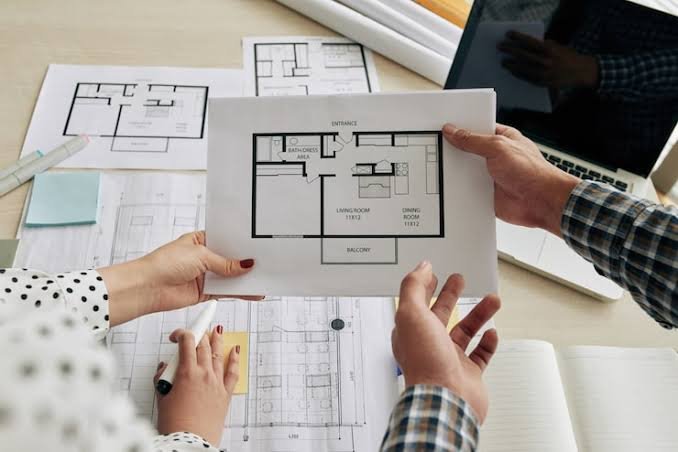
Size matters, but bigger is not automatically better.
An investor needs to understand what tenants in the target market actually want.
For example, a large three-bedroom apartment may provide more space, but if the purchase price is significantly higher than the additional rent it generates, the larger unit may produce a lower yield.
What Tenants Usually Look For
Depending on the market, tenants may prioritize:
- Practical floor plans
- Natural light
- Adequate storage
- Bedrooms with reasonable proportions
- Functional kitchens
- Balconies
- Parking
- Reliable water
- Security
- Good internet connectivity
A well-designed apartment can sometimes outperform a larger apartment with an inefficient layout.
Don’t Pay for Space Tenants Don’t Value
Investors should consider whether additional square meters actually translate into higher rent.
The objective is not necessarily to buy the biggest apartment.
It is to buy an apartment whose size, layout and price make sense for its target rental market.
7. The Building Is Well Managed
Buying a good apartment inside a poorly managed building can create problems.
Tenants experience the entire building, not just the interior of your unit.
Poor management can result in:
- Broken lifts
- Unreliable water
- Poor security
- Dirty common areas
- Unmaintained amenities
- Parking disputes
- Poor waste management
- Rising service charges
- Deteriorating external areas
These issues can affect both rental demand and resale value.
Check the Management Before Buying
Where possible, speak to existing owners and residents.
Ask about:
- Service-charge collection
- Building maintenance
- Security
- Lift reliability
- Water supply
- Generator or backup systems
- Management responsiveness
- Major upcoming repairs
- Disputes within the building
The answers can reveal issues that are not visible during a short property viewing.
8. Service Charges Are Reasonable
Service charges are particularly important when investing in apartments.
A property can generate strong gross rent while producing a much weaker net return because of high recurring expenses.
What Can Service Charges Cover?
Depending on the development, service charges can contribute toward:
- Security
- Cleaning
- Common-area maintenance
- Lift maintenance
- Landscaping
- Generator or backup power
- Water systems
- Swimming pools
- Gyms
- Other shared facilities
The exact structure varies between developments.
Compare Service Charge With Rent
Suppose two apartments both rent for KSh 80,000 per month.
If one has a substantially higher monthly service charge, the investor’s net income can be materially different even though the advertised rent is identical.
Therefore, service charge should be included in the investment calculation before buying.
9. The Apartment Has a Reasonable Resale Market

Rental income is only one part of property investment.
Eventually, you may want to sell.
That means you should consider who is likely to buy your apartment in the future.
Think About Your Exit Strategy
Ask:
If I wanted to sell this apartment in five or ten years, who would buy it?
Potential buyers could include:
- First-time homeowners
- Investors
- Families
- Professionals
- Diaspora buyers
- Other landlords
An apartment that appeals to several buyer groups may be easier to sell than one designed for a very narrow market.
Don’t Assume Capital Appreciation
Property prices can rise, but appreciation is not guaranteed.
The latest KNBS Residential Property Price Index illustrates this clearly: residential price movements have varied substantially across property types and Nairobi segments.
Therefore, investors should not base their entire investment decision on an assumption that the apartment will appreciate by a certain percentage every year.
10. The Apartment Is Legally and Properly Documented
A financially attractive property can still become a serious problem if the legal documentation is not in order.
Before buying, investors should carry out appropriate due diligence.
Conduct an Official Property Search
The State Department for Lands states that an official search certificate can be used to verify property ownership and identify encumbrances such as charges, cautions and restrictions.
This is an important part of the due-diligence process.
Kenya’s Ardhisasa platform also provides online land-related services, including property searches, transfers and other land administration services.
Check the Sale Documentation
Depending on the transaction, investors should have appropriate professional advice regarding:
- Title documentation
- Sale agreement
- Ownership
- Charges
- Restrictions
- Consents
- Transfer documents
- Building and development approvals
- Sectional title documentation where applicable
Do not rely solely on a sales representative’s assurance that everything is in order.
Independent legal due diligence is important.
11. The Total Cost of Buying the Apartment Is Affordable
The purchase price is only one component of the cost.
Investors should budget for the other expenses associated with acquiring and owning the property.
The State Department for Lands currently lists transfer-related charges including a KSh 1,000 transfer charge, a KSh 2,500 title fee and stamp duty at 2% or 4% of the property value, depending on the applicable circumstances.
KRA also confirms that land transactions involving a change of ownership generally attract stamp duty, subject to applicable exemptions.
Other Costs to Consider
Depending on the transaction, costs may include:
- Legal fees
- Stamp duty
- Registration charges
- Valuation
- Financing costs
- Mortgage-related expenses
- Furnishing
- Repairs
- Service charges
- Property management
- Insurance
These costs should be included in your financial model before deciding whether the investment is affordable.
12. The Property Is Not Over-Supplied
One of the biggest risks in some Nairobi apartment markets is competition from new developments.
When many similar apartments are available, landlords may have to compete on:
- Rent
- Furnishing
- Amenities
- Parking
- Building quality
- Move-in incentives
- Property management
Look at Future Supply
Before buying, investigate what is being constructed around the property.
Ask:
- How many new apartments are coming up?
- What sizes are they?
- What prices are they expected to achieve?
- Who is the target tenant?
- How does the new development compare with the apartment you are considering?
A neighborhood can have strong demand while still having enough new supply to create competition between landlords.
13. The Apartment Matches the Local Tenant Market
A property should be designed around actual demand.
For example, a neighborhood with a large population of young professionals may have stronger demand for smaller apartments than for very large family units.
Meanwhile, areas dominated by families may support stronger demand for two- and three-bedroom apartments.
Match the Property to the Tenant
Before buying, identify:
Who will rent this apartment?
Then consider whether the property offers what that tenant needs.
This includes:
- Size
- Rent
- Parking
- Security
- Amenities
- Accessibility
- Furnishing
- Internet
- Water reliability
- Proximity to work and services
The better the match, the easier it may be to maintain occupancy.
14. The Investment Still Works Under Conservative Assumptions
One of the best ways to test an apartment investment is to make the numbers less optimistic.
Instead of assuming:
- Maximum rent
- Zero vacancy
- No repairs
- Constant appreciation
- No unexpected costs
try a more conservative scenario.
Stress-Test the Investment
Ask what happens if:
- Rent is lower than expected
- The property is vacant for two months
- Service charges increase
- A major repair is required
- The property takes longer to sell
- Property prices remain flat
- Interest rates or financing costs increase
If the investment still makes financial sense under reasonable assumptions, you have a more robust investment case.
15. You Have a Clear Investment Strategy

Finally, a good apartment investment should have a clear purpose.
Are you buying primarily for:
- Monthly rental income?
- Long-term capital appreciation?
- Retirement income?
- Wealth preservation?
- Your own future use?
- A combination of these?
There is nothing wrong with buying a property that you personally love.
But if you are calling it an investment, you should assess it using investment criteria.
What Makes an Apartment a Good Investment in Nairobi?
Putting everything together, a good investment apartment in Nairobi generally has several characteristics.
1. Sensible Purchase Price
You are not paying a large premium that the rental income cannot justify.
2. Strong Tenant Demand
There are genuine reasons why people want to live in the location.
3. Realistic Rental Income
The expected rent is supported by comparable properties rather than simply an advertised figure.
4. Acceptable Net Rental Yield
The investment remains attractive after accounting for realistic expenses.
5. Good Occupancy Potential
The property has characteristics that make it competitive in its local rental market.
6. Strong Location
The apartment provides convenient access to employment, transport, schools, healthcare, shopping or other important amenities.
7. Reasonable Operating Costs
Service charges, maintenance and management costs do not consume an excessive portion of rental income.
8. Good Building Management
The development is properly maintained and managed.
9. Strong Resale Potential
There is a realistic market of future buyers.
10. Clean Legal Documentation
Ownership and other relevant documentation can be properly verified.
What Does the Current Nairobi Market Tell Investors?
Current market data provides an important reality check.
Cytonn’s FY2025/26 research recorded average apartment rental yields of approximately 6.5% and average apartment occupancy of 93.7% across the Nairobi Metropolitan Area.
However, the same research shows that apartment performance varies considerably between segments.
That means investors should be cautious about using a citywide average to predict the return from a particular apartment.
Meanwhile, the KNBS Residential Property Price Index shows significant differences in price movements between apartment segments and locations. In its April 2026 publication, KNBS reported that the overall residential property price index reached 117.7 in Q4 2025, while apartment indices in Nairobi’s upper and middle segments showed different movements from other Nairobi apartment areas.
The lesson is straightforward:
Nairobi is not one property market.
It is made up of many smaller markets, each with different levels of demand, supply, pricing and investment performance.
Frequently Asked Questions
A good investment apartment generally combines a sensible purchase price, strong rental demand, realistic rental income, manageable expenses, good occupancy potential, quality construction, strong location and reasonable resale prospects.
There is no universal yield that guarantees a good investment. Current market research puts the average apartment rental yield around 6.5%, but individual properties can perform significantly above or below this level.
No. A high gross yield can be offset by high service charges, maintenance, vacancy, management costs or other expenses. Investors should calculate the expected net return.
Neither is automatically better. They are different investments. An apartment can provide rental income, while land may depend more heavily on future appreciation or development potential. The right choice depends on the investor’s objectives, budget and risk tolerance.
Areas such as Westlands, Kileleshwa, Kilimani, Parklands and other established apartment markets can offer rental opportunities, but performance varies significantly by property. The neighborhood alone should not determine the purchase decision.
Final Thoughts
A good apartment investment in Nairobi is not necessarily the most expensive apartment, the newest development or the apartment in the most prestigious neighborhood.
It is the property where the numbers and fundamentals make sense.
Before buying, look at the purchase price, achievable rent, rental yield, occupancy, service charges, maintenance costs, tenant demand, building management, legal documentation and potential resale market.
Most importantly, use realistic assumptions.
Do not assume twelve months of rent every year.
Do not assume property prices will automatically rise.
Do not use an advertised rent without checking comparable properties.
Do not ignore service charges.
And do not treat a popular neighborhood as a guarantee of investment performance.
The current Nairobi market demonstrates why property investors need to look at individual opportunities rather than relying on broad assumptions. Apartment yields and occupancy remain meaningful, but performance varies between different segments and locations.
Ultimately, what makes an apartment a good investment in Nairobi is not simply where it is located. It is whether the property can provide a sensible combination of income, affordability, tenant demand, manageable costs, legal security and long-term value.
Looking to Buy an Apartment in Nairobi?
If you are researching apartments for sale in Nairobi, compare properties based on their location, price, rental potential, building quality and long-term investment fundamentals before making a decision.
For property enquiries, contact Habari Homes at info@habarihomes.com or +254100888899.


Join The Discussion