

Real estate can be a powerful way to build long-term wealth in Nairobi, but buying property does not automatically make someone a successful investor. A good location, attractive apartment and promising rental income can still result in a poor investment if the numbers, legal documents or market conditions are not properly assessed. To safeguard your capital and ensure steady returns, it is vital to avoid the 10 Mistakes That Can Ruin a Real Estate Investment in Nairobi.
The reality is that property investment involves substantial amounts of capital. Investors may also face vacancies, maintenance costs, service charges, financing costs, taxes, construction delays, changing tenant preferences and periods of weak price growth.
For example, Clayton’s Nairobi Metropolitan Area residential research recorded average residential rental yields of 5.4% and average price appreciation of just 0.4% in FY2024/25. Apartments performed better, with an average rental yield of 6.0% and average price appreciation of 0.4%. These figures demonstrate an important point: rental property returns should not be assumed or guaranteed simply because property is considered a long-term investment.
That is why understanding the mistakes investors make is just as important as understanding where to buy.
Below are 10 mistakes that can ruin a real estate investment in Nairobi, along with practical ways to avoid them.
1. Buying Property Without Doing Proper Due Diligence
One of the most serious mistakes an investor can make is rushing into a property purchase without independently verifying the property and the seller.
A property may look excellent, the price may appear attractive and the seller may seem trustworthy. However, none of those things replace proper due diligence.
What Should You Verify Before Buying?
For land and property transactions, investors should establish matters such as:
- Who legally owns the property
- Whether there are registered charges
- Whether there are cautions or restrictions
- Whether the property description matches the records
- Whether the seller has the legal capacity to sell
- Whether required consents are in place
- Whether there are outstanding land-related obligations
- Whether the property has planning or development issues
- Whether there are disputes affecting the property
The State Department for Lands specifically describes an official search certificate as a way to verify ownership and identify encumbrances such as charges, cautions and restrictions. It recommends the search as an important part of due diligence before property transactions.
Why This Mistake Can Be So Expensive
If an investor discovers a problem after paying a substantial deposit or completing a transaction, resolving it can become complicated and expensive.
Therefore, do not treat due diligence as paperwork that can be completed after agreeing to buy.
Do the checks before committing your money.
2. Choosing a Property Because You Like the Location
Liking a neighborhood does not necessarily mean that the property is a good investment.
This is particularly important in Nairobi because different neighborhoods attract different types of tenants and produce different investment results.
For example, an investor might personally prefer a luxury apartment for sale in an established neighborhood such as: Riverside, westlands, kilimani and kileleshwa. However, if the purchase price is too high relative to the rent that tenants are actually willing to pay, the investment may produce a disappointing yield.
Look Beyond the Neighborhood Name
Instead of asking:
“Is this a good area?”
ask:
“Does this specific property make financial sense at this purchase price?”
Consider:
- Actual achievable rent
- Comparable properties
- Vacancy levels
- Purchase price per square meter
- Service charge
- Property management costs
- Maintenance
- Parking
- Building quality
- Competition from nearby developments
- Resale demand
A good neighborhood can contain both good and bad investments, as property value is heavily tied to specific locations and nearby amenities such as: hospitals, restaurants, malls, and schools.

3. Assuming Property Prices Will Always Increase
One of the most dangerous assumptions in real estate is that property prices automatically rise every year.
They do not.
Nairobi has experienced periods of modest price growth, stagnation and weaker market conditions.
Clayton’s FY2024/25 Nairobi residential report recorded average price appreciation of only 0.4%, while average rental yields stood at 5.4%.
This means an investor who buys a property purely expecting significant capital appreciation could be disappointed.
Capital Appreciation Is Not Guaranteed
Property prices can be affected by:
- Interest rates
- Economic growth
- Household purchasing power
- Construction costs
- Availability of financing
- Infrastructure
- Oversupply
- Location
- Political and economic conditions
- Demand from buyers
Some properties appreciate strongly.
Others remain relatively flat for years.
Some may even fall in value in certain circumstances.
A Better Approach
When assessing an investment, calculate the potential return from rental income and capital appreciation separately.
Do not build your entire investment case around an assumption that the property will double in value.
4. Focusing Only on Rental Yield
Rental yield is important, but it is not the same thing as profit.
An investor may see a property advertised with an attractive rental yield and assume the investment is automatically strong.
That can be misleading.
Gross Yield vs Net Yield
Suppose an apartment costs KSh 15 million and rents for KSh 90,000 per month.
Annual rent:
KSh 90,000 × 12 = KSh 1.08 million
Gross rental yield:
KSh 1.08 million ÷ KSh 15 million = 7.2%
At first glance, 7.2% looks attractive.
But the investor still needs to consider:
- Vacancy
- Service charges
- Repairs
- Property management
- Insurance
- Furnishing
- Financing costs
- Taxes
- Legal and transaction costs
The amount left after these expenses is much more relevant to the investor’s actual return.
The Lesson
Always calculate both gross and estimated net rental yield.
A property producing a lower gross yield at a sensible price may ultimately outperform an apparently higher-yielding property with heavy expenses.
5. Ignoring Vacancy and Tenant Demand
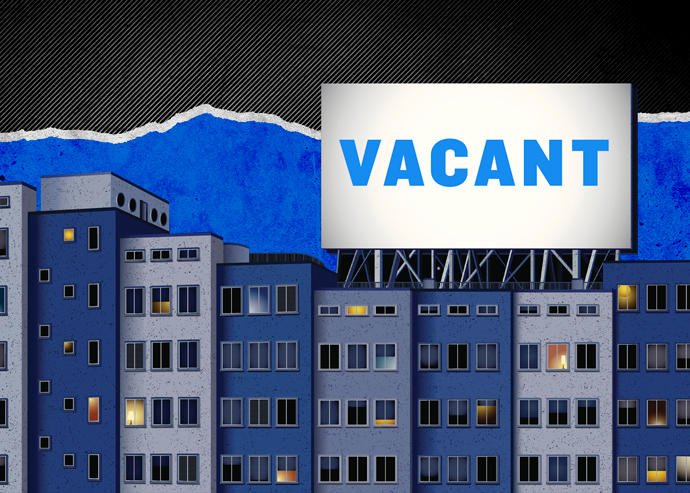
A property does not generate rental income when it is sitting empty.
This sounds obvious, but investors sometimes calculate their expected returns using twelve months of rent every year.
That can produce unrealistic projections.
Why Vacancy Matters
Imagine an apartment expected to rent for KSh 70,000 per month.
A simple annual projection gives:
KSh 840,000 per year
But if the property remains vacant for two months, the actual rent collected becomes:
KSh 700,000
That is a significant difference before considering other expenses.
Research the Actual Tenant Market
Before buying, investigate:
- Who rents in the area?
- What property sizes are most popular?
- What rents are actually achievable?
- How many comparable units are vacant?
- How long do similar properties typically take to rent?
- Are new developments adding competing units?
Nairobi’s rental market is not uniform. A property designed for a very narrow tenant group can face greater vacancy risk than one with broader demand.
6. Buying the Cheapest Property Instead of the Right Property

Price is important, but the cheapest property is not necessarily the best investment.
A cheap apartment might have:
- Poor access
- Weak tenant demand
- Poor construction
- High maintenance requirements
- Limited amenities
- Difficult resale prospects
- Security concerns
- High vacancy
- Poor management
Conversely, paying more for a property can make sense if the additional cost is supported by stronger rental demand, better location or better long-term liquidity.
Think About Value, Not Just Price
Instead of asking:
“How cheap is this property?”
ask:
“What am I getting for the price?”
Compare properties using:
- Price per square meter
- Expected rent
- Rental yield
- Building quality
- Location
- Amenities
- Service charge
- Occupancy
- Resale market
The objective should be to buy value, not simply a low purchase price.
7. Underestimating Service Charges and Maintenance Costs
This mistake is particularly important when investing in apartments.
An apartment may have an attractive purchase price and rental income, but recurring expenses can significantly reduce the investor’s net return.
Costs Investors Should Investigate
Before purchasing an apartment, ask about:
- Monthly service charge
- Lift maintenance
- Security
- Cleaning
- Common-area maintenance
- Swimming pool or gym maintenance
- Generator costs
- Water systems
- Insurance
- Repairs
- Property management
- Parking-related costs
Do not assume that the service charge will remain unchanged indefinitely.
Buildings age, equipment requires replacement and operating costs can change.
Ask for the Numbers
Where possible, request the building’s current service-charge information and understand exactly what is included.
A lower-priced apartment with high recurring expenses can sometimes be less attractive than a slightly more expensive property with better operating economics.
8. Buying Off-Plan Without Properly Assessing the Developer

Off-plan property can offer attractive payment structures and the opportunity to purchase before completion.
However, buying before a property is built introduces additional risks.
The biggest mistake is assuming that because a development has impressive marketing material, the project will automatically be completed exactly as promised.
What Should You Check?
Before committing to an off-plan development, investigate:
- Developer’s track record
- Previous completed projects
- Quality of previous developments
- Construction progress
- Legal ownership of the development site
- Approvals and permissions
- Sale agreement
- Payment schedule
- Completion provisions
- Extension clauses
- Refund provisions
- Service-charge structure
- Management arrangements
- Expected rental market
Previous Projects Matter
If a developer has completed several projects, visit those developments if possible.
Speak to existing owners or residents.
Look at the actual quality of completed buildings rather than relying entirely on computer-generated images and brochures.
Understand the Risk
An off-plan purchase is not simply a cheaper way to buy property.
It is also a commitment to a project that is still being delivered.
Investors should therefore understand both the potential benefits and the risks before signing.
9. Forgetting About Transaction Costs and Taxes
The purchase price is not the only cost involved in buying or selling property.
Investors need to budget for transaction-related expenses and understand which costs apply to their particular transaction.
Stamp Duty
Stamp duty can apply to property transactions, and the applicable rate depends on the nature of the instrument and transaction.
The Kenya Revenue Authority states that stamp duty applies to legal instruments including land transactions and that non-payment can have serious legal consequences.
The State Department for Lands also provides valuation services for determining the market value used in calculating stamp duty during transfers.
Capital Gains Tax
Investors should also understand the tax implications when selling property.
The current KRA position is that Capital Gains Tax is 15% of the net gain, with the seller/transferor generally responsible for the tax. KRA defines the net gain using the transfer value and adjusted costs, including certain acquisition, incidental and enhancement costs.
This is different from saying that 15% of the entire selling price is payable.
It is a tax on the net gain, subject to the applicable rules and exemptions.
Other Costs
Depending on the transaction, investors may also encounter:
- Legal fees
- Valuation fees
- Search fees
- Registration charges
- Financing costs
- Mortgage-related costs
- Agency fees
- Property management fees
These costs should be included in the investment calculation before deciding whether a property is affordable.
10. Investing With Money You Cannot Afford to Tie Up
Perhaps the biggest mistake is stretching your finances too far simply to get into the property market.
Property is relatively illiquid compared with cash.
If you suddenly need money, selling a property can take time, and selling quickly may force you to accept a lower price.
Don’t Confuse a Large Loan With a Large Investment
Borrowing can increase purchasing power, but it also increases risk.
An investor needs to consider:
- Monthly loan repayment
- Interest rate
- Rental income
- Vacancy
- Maintenance
- Service charges
- Emergency expenses
- Changes in interest rates
- Income stability
If the investment only works when the property is occupied every month and rent continues increasing, the financial model may be too aggressive.
Keep a Financial Buffer
A sensible investor should consider having enough liquidity to deal with periods when:
- The property is vacant
- A major repair is required
- A tenant leaves unexpectedly
- Rental income falls
- Interest costs increase
- The property takes longer than expected to sell
Real estate should form part of a broader financial plan rather than consume every available shilling.
How to Avoid These 10 Real Estate Investment Mistakes
Avoiding these mistakes does not require predicting the future.
It requires disciplined research.
Before buying, work through a checklist.
Step 1 — Define Your Investment Objective
Decide whether you are primarily looking for:
- Rental income
- Capital appreciation
- Long-term wealth preservation
- A future home
- A combination of these
Different objectives can lead to different property choices.
Step 2 — Establish Your Total Budget
Do not look only at the advertised purchase price.
Calculate the full amount required to complete the transaction and maintain the property.
Step 3 — Research the Market
Compare:
- Sale prices
- Asking rents
- Actual rental demand
- Competing properties
- New developments
- Occupancy
- Historical performance
Step 4 — Conduct Legal Due Diligence
Obtain an official search and verify the property’s ownership and encumbrances.
The State Department for Lands currently provides official search certificates specifically for verifying ownership and identifying encumbrances.
Step 5 — Calculate the Investment Return
Calculate:
Gross rental yield = Annual rent ÷ Purchase price × 100
Then estimate the net return after realistic expenses.
Step 6 — Stress-Test Your Numbers
Ask what happens if:
- Rent is 10% lower than expected
- The property is vacant for two months
- Service charges increase
- A major repair is required
- Completion is delayed
- Property prices remain flat for several years
If the investment still makes sense under reasonable stress scenarios, the investment case is stronger.
What Actually Makes a Good Real Estate Investment in Nairobi?
There is no single formula that guarantees success.
However, strong investments often share several characteristics.
They are:
- Bought at a sensible price
- Located where people genuinely want to live
- Supported by sustainable tenant demand
- Based on realistic rental assumptions
- Properly documented
- Professionally managed
- Affordable for the investor
- Not excessively dependent on future price appreciation
- Suitable for the intended tenant market
- Capable of generating acceptable net returns
The most important word here is realistic.
Do not use the highest advertised rent when calculating your returns.
Do not assume the property will appreciate by a certain percentage every year.
Do not ignore vacancy.
Do not ignore service charges.
Do not assume every new development will perform equally well.
And never replace legal due diligence with trust.
Frequently Asked Questions About Real Estate Investment in Nairobi
Real estate can still be a viable long-term investment in Nairobi, but returns vary considerably by property type, location and purchase price. Recent market data shows positive rental yields, but relatively modest average price appreciation, meaning investors should not rely solely on capital gains.
There is no universal rental-yield figure that makes a property automatically good. Investors should compare the yield with the property’s risk, operating expenses, financing costs and expected capital appreciation. Current Nairobi residential data has generally placed average apartment rental yields around the mid-single digits, although some specific segments and developments perform differently.
It depends on your budget and target tenant. Apartments can offer access to a broad tenant market and may require less capital than large detached homes. Houses can attract family and executive tenants but generally require more capital and maintenance.
Off-plan property can be worthwhile, but it carries additional development and delivery risks. Investors should investigate the developer, legal documents, payment terms, construction progress and expected rental market before committing.
Location is extremely important, but the neighborhood name alone is not enough. Access, tenant demand, infrastructure, amenities, competition and the specific property’s price all influence investment performance.
Final Thoughts
A successful real estate investment in Nairobi is rarely about finding a property that simply looks impressive.
It is about finding a property where the numbers, legal position, location, tenant demand and long-term prospects all make sense.
Nairobi’s residential market has opportunities, but it also has risks. Current research shows that rental income can provide relatively stable returns, while capital appreciation can be much more modest. In FY2024/25, Nairobi’s residential market averaged a 5.4% rental yield but only 0.4% price appreciation.
That is why investors should approach every purchase with realistic assumptions.
Do your due diligence. Verify the property. Understand the costs. Research the rental market. Calculate the net return. Stress-test your finances. And never assume that property prices will automatically rise.
The goal should not simply be to buy property.
The goal should be to buy the right property at the right price for the right investment strategy.
Looking to Buy Property in Nairobi?
If you are researching apartments or other residential properties in Nairobi, compare the location, purchase price, rental potential, development quality and long-term investment fundamentals before making a decision.
Habari Homes provides information on residential properties and apartments across Nairobi. For property enquiries, contact info@habarihomes.com or +254100888899.



Join The Discussion