

Finding the Best Nairobi Neighborhoods for Rental Property Investment depends on more than simply choosing the most expensive or prestigious area. A successful rental property investment needs a combination of strong tenant demand, sensible purchase prices, reliable occupancy, achievable rent, good infrastructure and long-term resale potential.
Nairobi has a wide range of residential markets, from low-density areas such as Runda and Karen to high-rise apartment markets such as Westlands, Kileleshwa, Kilimani and Parklands. Each attracts a different type of tenant and therefore presents a different investment opportunity.
Current market data also shows why investors need to look beyond headlines. In FY2025/26, Nairobi’s residential market recorded an average rental yield of 5.9%, while apartments averaged approximately 6.4%. Within the upper-mid-end apartment segment, Westlands recorded a 6.3% rental yield, Kileleshwa 6.6%, Kilimani 6.3% and Parklands 6.2%.
However, rental yield alone does not determine whether a property is a good investment. Vacancy, service charges, maintenance, property management, financing costs, taxes, building quality and the eventual resale market can significantly affect the actual return an investor receives.
For this guide, we look at eight established Nairobi neighborhoods in the following order: Runda, Karen, Westlands, Riverside, Kileleshwa, Lavington, Kilimani and Parklands.
Important: The order of the neighborhoods in this article follows the requested order and should not be interpreted as a ranking of the highest rental yields. The best area for one investor may not be the best area for another.
What Makes a Nairobi Neighborhood Good for Rental Property Investment?

Before looking at individual neighborhoods, it is important to understand what actually makes a rental property investment work.
Tenant Demand
The first question should always be: Who is likely to rent this property?
A property aimed at young professionals has a different tenant pool from a large family home aimed at executives or expatriates.
Areas close to business districts, international organizations, schools, hospitals, shopping centers and major transport routes tend to have broader sources of rental demand.
Rental Yield
Rental yield measures the annual rental income as a percentage of the property’s purchase price.
For example, if an apartment costs KSh 15 million and generates KSh 900,000 in annual rent, the gross rental yield is 6%.
However, this is only a gross calculation. The investor still needs to account for service charges, repairs, vacancies, management fees, insurance, financing costs and applicable taxes.
Occupancy
A property producing a high advertised rent is not necessarily a good investment if it remains vacant for long periods.
Occupancy is therefore extremely important.
For example, Cytonn’s FY2025/26 data recorded apartment occupancy of 90.1% in Westlands, 92.7% in Parklands, 96.1% in Kileleshwa and 92.8% in Kilimani.
Purchase Price
A neighborhood can have excellent rents but still produce disappointing returns if properties are overpriced.
This is why investors should compare the purchase price against achievable market rent, rather than looking at rent alone.
Resale Potential
Rental income is only one part of the investment equation.
Eventually, you may want to sell the property. A neighborhood with established infrastructure, strong tenant demand and a large pool of potential buyers can provide better liquidity than a highly specialized market.
1. Runda
Runda is one of Nairobi’s established high-end residential neighborhoods and is particularly associated with large detached homes, gardens, gated compounds and low-density development.
It is therefore quite different from apartment-heavy markets such as Westlands, Kilimani and Kileleshwa.
Why Runda Attracts Rental Property Investors
Runda benefits from its established reputation as a premium residential area and its proximity to areas such as Gigiri, Rosslyn, Two Rivers and parts of Westlands.
The tenant market is predominantly higher-income households, executives, diplomats, expatriates and families seeking larger homes and a quieter residential environment.
The quality of the tenant can be attractive to landlords, particularly where the property is well maintained and appropriately positioned for the market.
Runda Rental Investment Performance
Current Cytonn data provides a useful reality check.
In FY2025/26, Runda’s detached residential properties recorded approximately 96.8% occupancy, a 5.5% rental yield and 0.3% price appreciation, producing total returns of approximately 5.9%.
This is important because Runda demonstrates that a prestigious neighborhood does not automatically produce the highest rental yield.
The market is attractive partly because of tenant quality, location and stability rather than simply maximizing annual rental income.
What Type of Property Works Best in Runda?
Runda is generally more suited to:
- Detached family homes
- Large villas
- Executive residences
- Properties suitable for diplomatic or expatriate tenants
- High-quality homes with gardens and secure compounds
Investors looking purely for apartment rental yields may find other neighborhoods more suitable.
Runda Investment Advantages
Advantages include:
- Strong high-income tenant market
- High occupancy
- Established premium reputation
- Low-density environment
- Proximity to Gigiri and Two Rivers
- Strong demand for quality family housing
Runda Investment Risks
The main issue is the relatively high capital requirement.
Large houses also require significant maintenance. Landscaping, security, repairs and general upkeep can materially affect net returns.
Therefore, Runda is generally more appropriate for an investor prioritizing premium tenants, stability and long-term wealth preservation rather than simply chasing the highest possible yield.

2. Karen
Karen is another established high-end Nairobi neighborhood, known for large homes, generous plots, greenery and a quieter suburban environment.
Like Runda, it is fundamentally different from the high-rise apartment markets in central Nairobi.
Why Karen Attracts Tenants
Karen attracts families, expatriates, executives and tenants looking for more space and a suburban lifestyle.
The area also benefits from access to schools, shopping, hospitals and recreational amenities.
Its location also provides relatively convenient access toward Lang’ata, Ngong Road and the Southern Bypass, although commuting times can vary considerably depending on the exact property and time of day.
Karen Rental Investment Performance
Cytonn’s FY2025/26 data recorded 92.6% occupancy for detached properties in Karen, with a 5.6% rental yield and approximately -0.2% price appreciation. Total returns were approximately 5.4%.
This illustrates an important investment lesson: a neighborhood can have strong rental demand while still experiencing limited short-term capital appreciation.
What Type of Property Works Best in Karen?
Karen is particularly suitable for:
- Detached family homes
- Villas
- Gated homes
- Executive residences
- Large properties with gardens
- Homes targeting expatriate and senior corporate tenants
Karen Investment Advantages
- Strong family tenant market
- Established premium location
- Spacious properties
- Attractive lifestyle proposition
- Relatively strong occupancy
- Access to established schools and amenities
Karen Investment Risks
The biggest consideration is the amount of capital required.
Large properties can also have higher maintenance and operating costs than apartments.
Furthermore, the tenant pool is narrower than in neighborhoods dominated by one- and two-bedroom apartments.
Karen can therefore make sense for an investor who wants long-term premium residential exposure, but it may not be the most efficient choice for someone seeking maximum rental yield from a smaller amount of capital.
3. Westlands
Westlands is arguably one of Nairobi’s most established apartment and mixed-use rental markets.
Unlike Runda and Karen, Westlands offers a large supply of luxury apartments for sale , serviced apartments and mixed-use developments alongside offices, hotels, restaurants, shopping centers and entertainment facilities.
Why Westlands Is Attractive to Rental Investors
Westlands benefits from its position as both a residential and commercial hub.
The area attracts:
- Corporate employees
- Professionals
- Expatriates
- Business travelers
- Executives
- Students and younger professionals in selected parts
- Short- and medium-term tenants
Its proximity to major commercial destinations such as: Malls, hospitals, schools and entertainment spots is one of its biggest investment advantages.
Westlands Rental Investment Performance
Westlands is one of the strongest-performing apartment markets among the neighborhoods covered in this article.
Cytonn’s FY2025/26 data recorded:
- 90.1% occupancy
- 6.3% rental yield
- 4.4% price appreciation
- 10.6% total returns
The 10.6% total return was the highest among the five upper-mid-end apartment nodes listed in the same Cytonn table.
This makes Westlands particularly interesting for investors looking for a combination of rental income and capital appreciation.
What Type of Property Works Best in Westlands?
Depending on the exact location and building, investors can consider:
- Studios
- One-bedroom apartments
- Two-bedroom apartments
- Three-bedroom apartments
- Serviced apartments
- Furnished apartments
However, investors should not assume every new development will perform equally well.
The Problem of Apartment Supply
One of the biggest risks in Westlands is competition.
The area has experienced substantial apartment development. A new building may therefore compete against dozens of other buildings offering similar layouts and amenities.
As a result, investors need to pay attention to:
- Purchase price
- Location within Westlands
- Building quality
- Parking
- Security
- Amenities
- Service charge
- Property management
- Furnishing
- Actual achievable rent
Westlands Investment Verdict
Westlands has a strong investment case because it combines employment, lifestyle, hospitality, retail and residential demand.
However, investors should not buy simply because a property is described as being in Westlands.
The specific building and purchase price can make a major difference.

4. Riverside
Riverside is one of Nairobi’s premium residential and diplomatic-oriented neighborhoods.
It is particularly attractive to tenants who want a quieter environment while remaining close to Westlands and other major business districts.
Why Riverside Attracts Rental Demand
Riverside benefits from its location close to:
- Westlands
- Waiyaki Way
- Chiromo
- Nairobi CBD
- Major offices
- International organizations
- High-end retail and hospitality facilities
The area has also developed a strong reputation for premium apartments and serviced residences.
What Type of Tenant Rents in Riverside?
The Riverside tenant market tends to have more premium apartments for sale in riverside.
Potential tenants include:
- Senior corporate executives
- Expatriates
- Diplomats
- Employees of international organizations
- Corporate tenants
- Higher-income local professionals
What Type of Property Works Best in Riverside?
The strongest opportunities are generally properties that offer:
- High-quality finishes
- Good security
- Parking
- Reliable amenities
- Convenient access to major roads
- Professional property management
- Spacious and practical layouts
Serviced and furnished apartments can also appeal to particular corporate and expatriate segments.
Riverside Investment Advantages
Riverside’s biggest advantage is location quality combined with a premium tenant profile.
It also benefits from being close enough to Westlands to access the commercial and lifestyle infrastructure there without being directly in the middle of the busiest parts of the district.
Riverside Investment Risks
Riverside properties can command premium purchase prices.
That means investors need to carefully calculate the relationship between purchase price and achievable rent.
A property can be in a prestigious location and still produce a mediocre investment return if it was purchased too expensively.
5. Kileleshwa
Kileleshwa has become one of Nairobi’s major apartment rental markets.
The neighborhood has undergone significant residential development, creating a large selection of modern apartments aimed at professionals, couples and families.
Why Kileleshwa Is Popular With Tenants
Kileleshwa offers a useful balance between residential living and access to central Nairobi.
It is close to:
- Kilimani
- Lavington
- Riverside
- Westlands
- CBD
- Major shopping and lifestyle facilities
The neighborhood is particularly attractive to tenants who want a relatively quieter residential environment and premium apartments for sale in kileleshwa.
Kileleshwa Rental Investment Performance
Kileleshwa produced one of the strongest rental yields among the upper-mid-end apartment markets in Cytonn’s FY2025/26 data.
The figures were:
- 96.1% occupancy
- 6.6% rental yield
- 0.0% price appreciation
- 6.6% total returns
The 96.1% occupancy figure is particularly notable.
However, the lack of recorded price appreciation also shows why investors should distinguish between rental income and capital growth.
What Type of Property Works Best in Kileleshwa?
Kileleshwa has a strong market for:
- One-bedroom apartments
- Two-bedroom apartments
- Three-bedroom apartments
- Family apartments
- Modern developments with amenities
Two- and three-bedroom units can be particularly attractive for longer-term family and professional tenants, although the exact performance depends heavily on building quality and rent levels.
Kileleshwa Investment Risks
Kileleshwa has experienced substantial apartment construction.
Therefore, investors need to avoid assuming that all apartments will appreciate simply because the neighborhood is popular.
A well-priced apartment in a good building can perform very differently from an overpriced unit in a development competing with many similar properties.
6. Lavington
Lavington occupies a distinctive position in Nairobi’s residential market.
It combines established low-density residential areas with newer apartment developments, creating a mixed market that attracts both families and higher-income professionals.
Why Tenants Choose Lavington
Lavington appeals to tenants who value:
- Quiet residential streets
- Access to schools
- Shopping facilities
- Security
- Proximity to Kilimani and Kileleshwa
- Access to major business districts
- Larger homes and premium apartments
The neighborhood is particularly attractive to families and higher-income tenants.
Lavington Rental Investment Reality
Lavington is a good example of why investors should not automatically equate an affluent neighborhood with a high rental yield.
Cytonn’s FY2025/26 data for detached properties recorded approximately 87.2% occupancy, a 3.5% rental yield and 0.7% price appreciation, resulting in approximately 4.2% total returns.
This figure should not be interpreted as representing every Lavington property. It relates to the detached-property category used in the report.
Apartment performance can differ considerably.
What Type of Property Works Best in Lavington?
Investors can consider:
- Three-bedroom apartments
- Larger family apartments
- Townhouses
- Premium serviced apartments
- High-quality developments aimed at executives and families
Lavington Investment Advantages
- Premium residential reputation
- Strong family appeal
- Good access to established amenities
- Proximity to Kilimani and Kileleshwa
- Potential for long-term tenant retention
Lavington Investment Risks
The major issue is entry price.
If an investor pays a large premium for a property but cannot charge a correspondingly high rent, the gross yield can become relatively low.
Lavington therefore tends to make more sense for investors who value quality, location and long-term tenant demand rather than chasing the highest headline yield.
7. Kilimani
Kilimani is one of Nairobi’s most active apartment rental markets.
Its central location and large concentration of high end apartments for sale which make it particularly popular with young professionals, expatriates, corporate tenants and smaller households.
Why Kilimani Has Strong Rental Demand
Kilimani benefits from proximity to:
- Nairobi CBD
- Upper Hill
- Westlands
- Yaya Centre
- Ngong Road
- Major offices
- Restaurants and entertainment venues
- Schools and other amenities
This gives landlords access to a broad tenant pool.
Kilimani Rental Investment Performance
Cytonn’s FY2025/26 data recorded:
- 92.8% occupancy
- 6.3% rental yield
- 0.3% price appreciation
- 6.6% total returns
The market therefore continues to provide a reasonably balanced combination of rental income and capital performance.
What Type of Property Works Best in Kilimani?
The area has demand across several apartment categories, including:
- Studios
- One-bedroom apartments
- Two-bedroom apartments
- Three-bedroom apartments
- Furnished apartments
- Serviced apartments
The large tenant pool can be an advantage, but investors also need to account for competition.
Kilimani’s Biggest Investment Risk
Kilimani has seen extensive apartment construction.
That means landlords are often competing against many similar units.
Two apartments can therefore have completely different vacancy rates even when they are located only a short distance apart.
Factors such as parking, security, natural light, floor plan, road access, building management and service charges can influence tenant decisions.
Kilimani Investment Verdict
Kilimani can be particularly attractive for investors looking for apartment rental income and a broad tenant market.
However, buying at the right price is critical.
A high rental yield on paper can disappear once service charges, furnishing, vacancy and management costs are included.

8. Parklands
Parklands is one of Nairobi’s established residential areas and benefits from its location next to Westlands and its proximity to important healthcare, educational, commercial and retail facilities.
It also has a substantial apartment market.
Why Parklands Attracts Tenants
Parklands appeals to several tenant groups, including:
- Families
- Medical professionals
- Corporate employees
- Students and young professionals in selected areas
- Long-term residents
- Higher-income tenants
Its proximity to major hospitals and the wider Westlands commercial area adds to its rental appeal.
Parklands Rental Investment Performance
Cytonn’s FY2025/26 data recorded:
- 92.7% occupancy
- 6.2% rental yield
- 1.5% price appreciation
- 7.7% total returns
The 1.5% price appreciation recorded during the period was stronger than the 0.0% recorded in Kileleshwa and the 0.3% recorded in Kilimani.
What Type of Property Works Best in Parklands?
Potential investment options include:
- One-bedroom apartments
- Two-bedroom apartments
- Three-bedroom apartments
- Family apartments
- Modern developments
- Furnished units in suitable locations
The exact tenant profile can vary significantly depending on which part of Parklands the property is located in.
Parklands Investment Advantages
- Established residential market
- Strong occupancy
- Proximity to Westlands
- Access to hospitals and schools
- Broad tenant pool
- Established apartment market
Parklands Investment Risks
As with Westlands, Kileleshwa and Kilimani, investors should consider competition from newer developments.
An older apartment may struggle to achieve the same rent as a newer development unless it offers other advantages such as larger floor plans, better location or competitive pricing.
How Do These Nairobi Neighborhoods Compare?
The current data provides an interesting comparison.
For detached properties, Runda and Karen produced rental yields of approximately 5.5% and 5.6%, respectively, in FY2025/26. For apartments, Westlands recorded 6.3%, Parklands 6.2%, Kileleshwa 6.6% and Kilimani 6.3%.
| Neighborhood | Main Property Market | Key Investment Strength | Main Consideration |
|---|---|---|---|
| Runda | Detached homes | Premium tenant market and high occupancy | High capital requirement |
| Karen | Detached homes | Family and executive demand | Large properties can have high maintenance costs |
| Westlands | Apartments / mixed-use | Strong rental and capital-return potential | Competition and new supply |
| Riverside | Premium apartments | Executive and expatriate tenant market | Premium purchase prices |
| Kileleshwa | Apartments | High occupancy and strong rental demand | Significant apartment supply |
| Lavington | Apartments / houses | Premium family market | Higher entry prices and potentially lower yields |
| Kilimani | Apartments | Broad tenant pool | High competition between apartments |
| Parklands | Apartments | Strong occupancy and established demand | Competition from newer developments |
Which Nairobi Neighborhood Has the Best Rental Yield?
There is no single answer that applies to every property.
Based on Cytonn’s FY2025/26 data, Kileleshwa recorded the highest rental yield among the four upper-mid-end apartment neighborhoods in this list at 6.6%, followed by Westlands and Kilimani at 6.3% and Parklands at 6.2%.
However, this does not mean every Kileleshwa apartment will produce a 6.6% yield.
Rental yield depends on the property’s actual purchase price, achievable rent, size, condition, service charge and vacancy.
Similarly, a property purchased below market value in Westlands could outperform an overpriced property in Kileleshwa.
Which Nairobi Neighborhood Is Best for High Rental Demand?
For apartments, the data points toward several strong markets.
Kileleshwa recorded 96.1% occupancy, Parklands 92.7%, Kilimani 92.8% and Westlands 90.1% in Cytonn’s FY2025/26 data.
This suggests that Kileleshwa had particularly strong occupancy during the period.
However, occupancy should always be assessed at the building and unit level, not just the neighborhood level.
A poorly located apartment in a popular neighborhood can remain vacant while a well-priced apartment nearby rents quickly.
Is a Higher Rental Yield Always Better?

No.
This is one of the most important lessons for property investors.
Suppose Property A produces a 7% gross rental yield but experiences frequent vacancies and high maintenance costs.
Property B produces a 5.8% gross yield but remains occupied consistently, has lower maintenance expenses and sits in a highly liquid location.
Property B may ultimately produce a better net investment outcome.
Investors should therefore look at:
- Gross rental yield
- Net rental yield
- Occupancy
- Service charge
- Maintenance costs
- Property management fees
- Financing costs
- Taxes
- Capital appreciation
- Resale liquidity
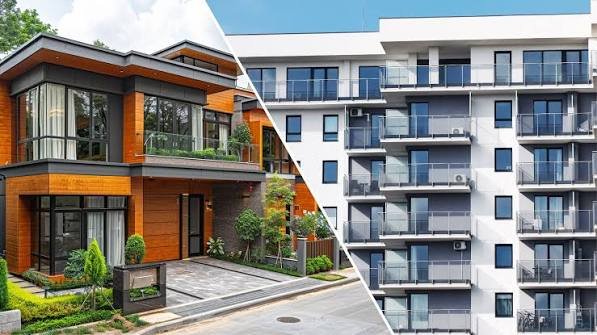
Apartment vs House: Which Is Better for Rental Investment in Nairobi?
The answer depends on your investment objective.
Apartments
Apartments can be attractive because:
- They generally require less capital than large detached houses
- They can access a larger tenant pool
- Maintenance of common areas is shared through service charges
- One-bedroom and two-bedroom units can have strong rental demand
- They can be easier to sell to another investor
However, apartment investors must consider competition from new developments and recurring service charges.
Detached Houses
Detached houses in Runda and Karen can appeal to higher-income tenants and families.
Their advantages can include:
- Larger spaces
- More privacy
- Premium tenant positioning
- Scarcity of certain types of quality homes
The disadvantages include:
- Higher acquisition costs
- Higher maintenance requirements
- Smaller tenant pool
- Potentially lower rental yields relative to purchase price
What Should You Check Before Buying a Rental Property in Nairobi?
Choosing the neighborhood is only the first step.
Before purchasing, investors should conduct a property-level assessment.
Check Comparable Rents
Do not rely solely on the rent quoted by a seller or developer.
Look at comparable properties in the same neighborhood and, ideally, the same building.
Calculate the Gross Rental Yield
Use:
Annual rental income ÷ purchase price × 100
Then calculate the expected net return after expenses.
Check Service Charges
A high service charge can significantly reduce the amount of rental income you actually retain.
Ask for the current service-charge amount and understand what it covers.
Check Vacancy Risk
Ask:
- How long do similar units normally take to rent?
- How many comparable units are currently vacant?
- How many new apartments are under construction nearby?
Check the Building
Look beyond the apartment itself.
Assess:
- Construction quality
- Management
- Security
- Lifts
- Backup power
- Water supply
- Parking
- Internet connectivity
- Maintenance
- Common areas
Check the Exit Strategy
Ask yourself:
If I need to sell this property in five or ten years, who is likely to buy it?
A property with a large potential buyer pool can provide greater liquidity.
The Biggest Mistake Investors Make When Choosing a Nairobi Rental Property
One of the biggest mistakes is buying based on the neighborhood name alone.
An investor may think:
“Westlands is a good area, so any apartment in Westlands must be a good investment.”
That is not necessarily true.
The same applies to Kilimani, Kileleshwa, Riverside, Parklands, Karen or Runda.
A good investment requires the right property at the right price in the right micro-location.
For example, a KSh 15 million apartment producing KSh 75,000 per month has a very different investment profile from a KSh 12 million apartment producing KSh 80,000 per month, even if both are in the same neighborhood.
So, What Are the Best Nairobi Neighborhoods for Rental Property Investment?
The answer depends on the type of investor.
Runda and Karen are more appropriate for investors targeting premium family and executive tenants through detached homes.
Westlands stands out for investors looking for a combination of rental income, commercial proximity and potential capital appreciation.
Riverside is particularly suited to investors targeting premium corporate, expatriate and executive tenants.
Kileleshwa offers strong apartment occupancy and, based on current Cytonn data, the highest rental yield among the selected upper-mid-end apartment markets in this comparison.
Lavington appeals to investors targeting premium family tenants and long-term residential demand, although returns can be more dependent on buying at the right price.
Kilimani offers one of Nairobi’s deepest apartment rental markets and a broad tenant pool, but competition between properties is significant.
Parklands combines an established apartment market with strong occupancy, proximity to Westlands and access to major amenities.
Ultimately, there is no neighborhood that is automatically the “best” investment.
The best investment is usually the property where purchase price, achievable rent, occupancy, operating costs, tenant demand and future resale prospects make sense together.
Final Thoughts
Nairobi remains one of Kenya’s most important residential property markets, but investors should approach it with realistic expectations.
Current data shows that the city’s residential market improved during FY2025/26, with average rental yield rising to 5.9% and average total returns reaching 6.6%. Apartments performed somewhat better, with an average rental yield of approximately 6.4%.
Nevertheless, these are market averages. They should never be treated as guaranteed returns.
Runda, Karen, Westlands, Riverside, Kileleshwa, Lavington, Kilimani and Parklands all have different tenant profiles, property types, price levels and risks.
Therefore, investors should avoid choosing a property simply because a neighborhood has a strong reputation.
Instead, compare the actual numbers.
Look at the purchase price. Check realistic rent. Calculate the gross and net yield. Examine occupancy. Understand service charges. Assess competing developments. Then consider the property’s long-term resale potential.
That approach is far more reliable than simply choosing the most fashionable neighborhood.
Want to Invest in Nairobi Property?
If you are considering buying an apartment or other residential property in Nairobi, it is important to compare different neighborhoods, developments, prices and expected rental returns before making a decision.
For information on available properties and investment opportunities in Nairobi, contact Habari Homes at info@habarihomes.com or +254100888899.




Join The Discussion